addthis

Bookmark and Share

4/30/08

If You Build It, They Will Thrive

We all know biodiversity thrives in coral, but at the New England Aquarium, it's a fact unfolding every day in front of thousands of visitors.

In 1984, the Aquarium doubled the number of species and individuals in its signature Giant Ocean Tank (GOT) by adding the magic ingredient--a massive coral reef replica.

In a history that unfolds almost like a controlled experiment, the coral reef habitat replaced a smooth-surfaced rock construction that had rested in the tank since the Aquarium opened in 1969. The amorphous rock only gave fishes an object to swim around, and nowhere to hide from the predatory species in the tank. That meant that even though the GOT was the crown jewel of the Aquarium, it could safely hold only 48 species of larger fishes. However, within a year of being transformed into a coral reef, the exhibit held 98 species. Today, as Aquarium biologists continue to learn more about the reef's potential, it holds 130 species. (You can view it live on webcam here.)

The transformation into a coral reef became possible in the 1980s because exhibit technology had progressed to the point of allowing for a more accurate representation of a specific ocean environment. The Aquarium decided to replicate a Caribbean coral habitat to call attention to the mass destruction of corals and give Aquarium visitors a visual representation of what was being lost.

The full weight of the fabrication end of the project fell on the Aquariums resident habitat scultpor, Peter Brady. For two and a half years, Brady worked with photographs, coral molds and his own observations to sculpt a coral reef replica 23 feet high and nearly 40 feet wide, roughly the size of a townhouse. "It was the biggest prefabrication project I ever worked on," Brady recalls.

Exhibit designer Peter Brady adds finishing touches to some plate coral in 1984.

The coral was built in an East Boston warehouse and, after careful review, transported to the Aquarium in pieces. It was assembled and painted inside the tank. The fishes were added in stages after careful testing confirmed that there were no trace resin from the fiberglass or paint resin was in the water.

After the New England Aquarium unveiled the finished coral reef, several aquariums around the world launched their own coral reef replicas. Steve Lenox, currently a principal at exhibit design company Lyons/Zaremba Inc., worked on the GOT coral reef as well as subsequent projects at the Florida Aquarium and Long Beach Aquarium. He notes that "before the New England Aquarium's reef, there really weren't many exhibits where tiny Gobis could coexist with six foot sharks."

Today the GOT coral reef continues to immerse visitors in the world of a coral habitat. However, constant cleaning of all surfaces to remove algae dulled the exhibit's vibrant colors.
Brady s
ays the exhibit team will likely have an opportunity to touch up the coral structures and replace painted corals with new materials that are colored in the molding process.

Here's a sample of the species count in the GOT over time:


Pre-Coral: 1983
48 species, 210 individuals

Post-Coral: 1986
96 species, 479 individuals

2006:
130 species, 630 individuals


Keep reading with Dr. Les Kaufman's recollections of the project.
As I spoke with people who worked on this exhibit, a number of other skilled designers were repeatedly mentioned, including project manager Dick Lyons, fish curator Paul Sieswerda, and current Associate Director John Dayton.

Memoires of a Coral Builder

Dr. Les Kaufman was one of the principal designers of the Aquarium's ground-breaking Caribbean coral reef exhibit in the Giant Ocean Tank. When I contacted him to find out more about the project, he was in the midst of a conference in Vancouver, B.C., but he still found time to write a great recollection of the project.

I was going to use quotes, but it's all so good I thought I'd post it in its entirety with pictures (I also added the links). So, without further ado, here's the recollections of a committed coral reef conservationist on building an exhibit that has brought coral habitats to life for millions of students:

"My concept for the reef layout was to feature a Caribbean reef from the surface to 40m depth. I was strongly motivated to do so because this was just at the beginning of the time when the Caribbean-wide mass decline of coral reef habitats was pulling into full swing, and I felt the projection of a clear view of what these reefs had been and could be again was a good idea. The top of the Giant Ocean Tank (GOT) depicts a reef crest, and the route around it beginning at the second level and ending at the bottom in the tropical gallery, traces a sand channel from a simulated depth of 4m to 40m in wall (shelf edge) habitat at the very bottom. My mental models for this scene were the long-term research sites on the north coast of Jamaica called Pear Tree Bottom, Rio Bueno, and Chalet Caribe.

The top of the Giant Ocean Tank depicts a reef crest.

"We were maniacal about accuracy, and the corals in their original color and form were strikingly realistic, at least for a while. In the old GOT fishes moved pretty freely almost everywhere, especially the smaller species. [Note: The old GOT had a large, smooth surfaced rock with no coral-like formations.]

"When first put in the new reef fishes again moved about seemingly everywhere, and I was very disappointed because I'd worked so hard with the team to encourage distinct habitat associations. However, soon after the big predatory species were returned to the tank, it was as if the picture were focussed suddenly, for the smaller fishes actually did begin to narrow their movements to habitat closely resembling the places that they would be found in nature.

"The most striking example was the threespot damselfish, Stegastes planifrons, the animal I did my thesis work on and so had rather strong feelings about. It moved into the staghorn coral thickets that once adorned the reef terrace above and to the right of the large sand plain. The sand plain was copied from Dancing Lady Reef at Discovery Bay, Jamaica, at a specific place we have long called "Oz." The pillar coral on the left side of the sand tray (I think it is still there) was known in life as "The Castle"; it has long since toppled over, died back, and begun to recover. I hope to visit it during early July again and see how it is doing.

"The creation of the GOT coral reef exhibit was a very special time for all of us. We grew close, dealt with myriad technical details and difficulties, and together realized a creative vision that we all contributed to and shared. It was one of my most satisfying professional experiences. The molds that Peter [Brady] made (including at least one remarkable field trip) were pressed into service to refaunate many other aquarium exhibits, and served as the prototype for a host of new coral molds, mainly Indo-Pacific, that we engaged the Larson Company to produce when we created the Osaka Aquarium in Japan. Steve Lenox will better know all the begats that the GOT exhibit led to.

"As part of the GOT project I led a team that produced a filmstrip, an auditorium show (I remember now it was NOT a film, but rather a multimedia show including still and moving footage), and a children's book ("Dive to the Coral Reef") that won many awards over the years. The media show was Paul Erickson's baby, expertly produced including an original score, and the book was first-authored by Elizabeth Tayntor, who worked for me in the Education Department. Paul and I were the coauthors. [Note: Looks like they also wrote a book about the production of the exhibit.]

"It is my impression that reproductive activity among the reef fishes was increased after they settled into the new exhibit, but that could be an artifact of there being so many more species than previously, or perhaps just my wishful thinking!

"Looking at the GOT now is a bit sad for me....not because the exhibit has deteriorated over the years- that is natural- but rather because the wonderful coral reef habitat that it depicts actually no longer exists in the tropical west Atlantic ocean except in small bits, here and there, where the promise of regeneration may be met. As the system recovers- especially in some spots in Belize, Bonaire, the Bahamas, and Cuba- it faces an uncertain future because of a host of novel insults, partly or wholly connected with global climate change: bouts of massively powerful hurricanes, vast areas of reef subjected to thermal anomalies and coral bleaching, rampant coral disease, and a widespread shift from live coral dominance to fleshy algal cover on the reefs of the region. There is much written about this in the scientific literature- the earliest account that I know of is in my chapter in the book The Last Extinction, published by the Aquarium in collaboration with MIT Press and edited by Kenneth G. Mallory and me."

Major hat tip to Dr. Kaufman for the insight. He is now a professor at the Boston University Marine Program. He heads up the Kaufman lab (pdf, page 2) dedicated to the study of fish biodiversity.

You can see the GOT live on webcam here.

4/28/08

Echinoblog Rocks!

Growing up in the Pacific Northwest, I often found myself sitting waist deep in a tide pool stroking a green anemone and feeling the mild tingle and stickiness. I had forgotten what that absorbing fascination was like ... until I found echinoblog.

The first entry I read was a thoroughly gross starfish-eating post. At first I thought the blog was just bizarre.

However, like many bizarre things, echinoblog has grown on me. Now, I'm certain it's the greatest blog ever. Chris M's infectious love of invertibrate creatures is completely overwhelming.

Witness his latest post about sea urchins feeding on stalked crinoids. The long series of intriguing questions, videos and pictures ends with a joyous "This is why I love science!" ... and I can't help but echo with equal elation "I love science now too!"

Please, do yourself a favor and read this blog religiously.


The Definition of Aquarium


Thanks to two Irish web entrepreneurs (and to fishmonger for giving me the idea), the New England Aquarium has laid claim to the word "Aquarium" and "Aquariums." Check it out:


Where do those definition buttons link to? The Aquarium web site of course. And well they should. Over its 37 year history, the New England Aquarium has broken new ground in the way Aquariums reach people and promote conservation. The Aquarium's founders were engaged in marine animal rescue efforts well before there was an actual building for visitors to view animals. And when the building was finished it revitalized Boston's waterfront and became a model for Aquariums around the world.

That isn't to say that many other aquariums don't equally share in the definition of what it means to care for the planet's ocean health ... they definitely do. I just happened to drop $17 first to participate in The Big Word Project.

What can I say? I'm proud of my new job!

15,000 Year Old Animal

Much like the fascinating depths of the sea, the comments section of deep sea news holds untold treasures.

Specifically... the longest living animal on Earth... the incredible Scolymastra joubini Vase Sea Sponge! I had no idea. And although it seems to contradict this deep sea news post, I'm inclined to believe it's real.

It looks 15,000 years old. You can see it on this site from SUNY Stonybrook, which is very strict about cross-posting images so you'll have to go there to view their incredible expedition photos. It's well worth it.

4/24/08

It's worth pursuading

Another interesting post from Mark Powell at blogfish. It raises the topic of persuasion in science and the scientific community's reaction to Ben "Bueller" Stein's latest opus.

My takeaway quote of note:

I've spent the last 15 years learning how to do conservation work. I’ve learned a lot about persuasion in that time, and it was a long, hard learning process. Not unlike my science training.

As a communications person myself (keep the snickers to a minimum), I've often noticed a wall of apprehension go up between writers and scientists. On the reporter side it's "oh no this scientist is going to be dull." On the scientist's side it's "oh no this reporter is going to get it all wrong."

It's a tale as old as time, and I think both sides are within their rights to feel that way.

After all, the reporter's job is to attract readers and the scientist's job is to research fact.

However, something that has become clear to me in my brief time at the Aquarium, both sides need to work together to accomplish absolutely essential things. Living things are dying. Species are being wiped off the face of Earth.

So at the end of the day it's fine to be careful, reasoned and skeptical ... but it's also important to locate the core message and present it clearly in the cultural context of our world. I don't think of that as beguiling an audience or resorting to trickery. I think of that as telling the truth in the way it needs to be told for people to listen.

Magic Turtle?

So, I've been having a blast clicking through the tracking data at seaturtle.org. I initially went there to check and see if the locator for Quiddick, one of the green turtles rescued by the Aquarium, was still active. It isn't, but here's the data set from a little over a year of tracking:


It's a bummer that the transmitter died, because it looks like Quiddick was in the midst of a multi-year transatlantic journey. I would love to see that completed data.

Anyway, you can see there are dotted lines in the map that (I guess) indicate lapses in transmissions (possibly due to depth or atmospheric conditions?). That's all well and good in the open ocean, but check out the data set from a Georgia Sea Turtle Rescue Center case named Bev:

Tell me that doesn't look like Bev decided to skip the Keys and hopped a greyhound through Miami.


4/23/08

Meet Fluffy

The Aquarium has a great new visitor tailor made to shock and amaze school students during the busy April vacation.

It's Fluffy the alligator snapping turtle:
It was great to witness the students' reaction to the live animal presentation this morning. Their jaws dropped to the floor when Fluffy came out of his bin. This guy is the real deal: 45 pounds of freshwater snappitude.

Alligator snapping turtles have one of the most powerful bites in the world. That beak could sever a finger no problem, and in the wild it's also used for piercing (get this) other turtles' shells.

The vets have to hold him tightly by the top and bottom of his shell to keep him calm and keep his beak out of reach. This guy came to the aquarium from a New England reptile expert who runs an educational business on the side.

Ready for the strangest part? Fluffy wasn't taken from the wild or found washed up on a riverbank in his natural southern habitat. He was found guarding a stash of drugs during a bust in Long Island, NY. The police called in the reptile expert to remove the Fluffy, who eventually ended up at the New England Aquarium wowing children.

That's a far cry different than guarding narcotics from prying fingers.

4/22/08

10 Things You Can Do

Note to kids: Protecting Oceans=protecting Nemo

The NEAQ website is soon to be relaunched with a plethora of intensely cool things on it. (Including, but not limited to, flash interactives. The kids will go mad .)

The new content will focus on empowering visitors to make a difference in the health of our oceans. Here's a sample list of eco-suggestions (a preview if you will) of what is upcoming when the new site launches:


  • Choose eco-friendly seafood.
  • Buy local and organic produce, coffee and other household products.
  • Drive a fuel-efficient, low-polluting car.
  • Choose to walk, bike or take public transportation whenever practical.
  • Install energy-saving thermostats in your home.
  • Install energy-efficient light bulbs and appliances.
  • Eliminate lawn pesticides and choose native plants for your garden.
  • Stay well informed and vote with the environment in mind.
  • Use your consumer power— learn about the environmental practices of companies you buy from.
  • Inspire your friends and family to also take action.

I think this is pretty great. Anyone can pick three or four things out of there to definitely do, and the whole list is definitely achievable for most New England families.

4/18/08

An Athletic Challenge to Kiribati!

In a recent post I noted the athletic ambitions of the eco-friendly island nation Kiribati.

Now, in the spirit of global competition, I propose we ditch Beijing this August and have an entirely different Olympics.

The Location: Kiribati


The competitors: Sea Turtles


Bring it on Kiribati, New England has some of the fastest (and periodically confused) sea turtles on Earth.


The Penguins are Back!

In what may have been the most exciting homecoming of my life (sorry high school, you weren't good to me), the Aquarium's penguins have returned to their enclosure!
The little blues were first back out on the newly cleaned rocks with the new filtration system pumping out 56 degree water for them to swim in with those adorable little wings.

The cooing from the hundreds of watching visitors was deafening.

I can't wait to see the excitement when all 75+ penguins are cycled in. The Aquarium penguinologists (that's what I call them) are moving each species into the enclosure in groups. for the last six weeks the penguins have been in a holding facility at the back of the Aquarium while their living systems were upgraded.

The rockhoppers were the second group out, and then the African penguins.

Now that they're back this video is once again relevant for encouraging visitors.
I love it:


I'll update with more pictures when I get them. My camera was at home today (d'oh) but everyone else had one so I should be able to get a bunch of great shots.


The Widening Gyre

Turning and turning in the widening gyre
The falcon cannot hear the falconer
Things fall apart
The center cannot hold
-The second coming, W.B. Yeats

Before my employment here at the aquarium, I had no idea there was a continent of plastic trash in the Pacific ocean. This image shows how it got there. Now, sheepishly, I know the truth and it's completely unreal.


There are a bunch of great groups researching the this and educating the public. Among them is the Algalita Marine Research Foundation. Their director, Marcus Erikson has been raising awareness about plastics for years. One of his more exciting publicity tactics is building boats out of plastic and sailing them long distances. Now doing it from L.A. to Hawaii.

This guy's efforts (and the Gyre) should be way higher on the public radar screen. Hopefully this trip will spur that. Thanks to ecodaredevil and deep-sea news for leading me to this story.

4/17/08

Whales vs. Lobsters

Blogfish has a great post about lobster gear/right whale entanglements today.

Given that the Aquarium started the oldest right whale research center in the country and I have to learn about it anyway, I've been doing some poking around the issue (you know, for fun and sport). I started by following the links to the Maine Lobstermen side of the argument, where I found this quote:

For instance, while right whales are present in large number in both Cape Cod Bay and the Bay of Fundy, less than 10 right whales have been sighted in Maine state waters over the past 35 years where over 80% of Maine’s lobstermen work.


My first reaction to that was one of journalistic suspicion. Especially since the purported supporting link takes you to this map (pdf) that shows A LOT of right whale sightings near Maine.

However, the contextual technicality of the link is that, indeed, there are very few right whale sightings recorded in the relatively close confines of the Maine state waters. It's in those state waters that the Atlantic States Marine Fisheries Comission confirms MLA's claim that 80% of the lobster catch does, in fact, occur.

So, it would seem that the MLA has a point. Why should lobstermen be encumbered by gear restrictions in areas where there aren't any right whales?

But then you realize that under the proposed rules they wouldn't be.

A closer look at the DMR map cited by the MLA shows that the proposed restrictions apply to an area that almost exactly lines up with the boundary of those state waters:
Purple line= new restriction boundary
Blue line= state waters

Now, there is certainly a huge section of state waters southeast of Rockland that is not included in the DMR free zone, but the rest of the coastlines seem to match up fairly closely. If I were the MLA, I would be arguing to get the DMR line to include those state water areas instead of arguing against entire concept of the regulation as they do here:
The proposed broad based gear modifications would mandate all lobstermen up and down the eastern coast of the United States to connect their multi-trawl traps with rope that does not float, but instead sinks to the ocean floor. The Maine Lobstermen’s Association opposes these regulations because they are excessive, are not based on science and do not demonstrably reduce entanglement risk to whales in Maine

So, despite the fact that 80% of their lobster are caught close to the shore, where the new regulation would not affect (presumably) the vast majority of their lobstermen ... the MLA is opposed to the new fishing gear entirely.

Why?

Well, how far out do lobster zones go?


Wow! That's pretty far... And this map from the Maine DMR has an overlay that shows you just how many right whales have been seen in those zones. It's a lot. Especially in the southern zones of G,F,E, and D.

And, it's in those southern zones where lobster stock is dropping (pdf).

So here's my hypothesis: Less lobster is available and with landings on an exponential rise to lobstermen are struggling to meet a growing demand. Not only that, but there's intense market pressure to make the lobster supply look sustainable, even at this heightened rate of harvesting. As a result, the MLA is fighting this regulation because it needs to know that as lobster supplies dwindle closer to shore, they will have the freedom to begin fishing farther out to sea.

However, they can't make that argument, because it is a tacit acknowledgment that lobster supply is, indeed, dwindling ... and therefore not sustainable, and therefore Wal-Mart and Whole Foods won't buy it.

The MLA certainly doesn't want to hurt whales, and it certainly doesn't want to destroy lobster supply ... but they're in a tight spot right now and they need to know there's a way out if things get tough.

Disclaimer: All of this was a research exercise and I'm not an expert by any means. I'm just having fun poking around the web and investigating issues. Feel free to set me straight if, as is most likely the case, I am way off.

Update: Thanks to Mark Powell at blogfish for the link. I encourage all you NEAQ-heads to check out his blog on a regular basis. He knows his oceans, and he's from my home state of Washington.

4/16/08

Two Reasons to Love Kiribati

1. The nation's Olymic hopes rest on the street ping pong.
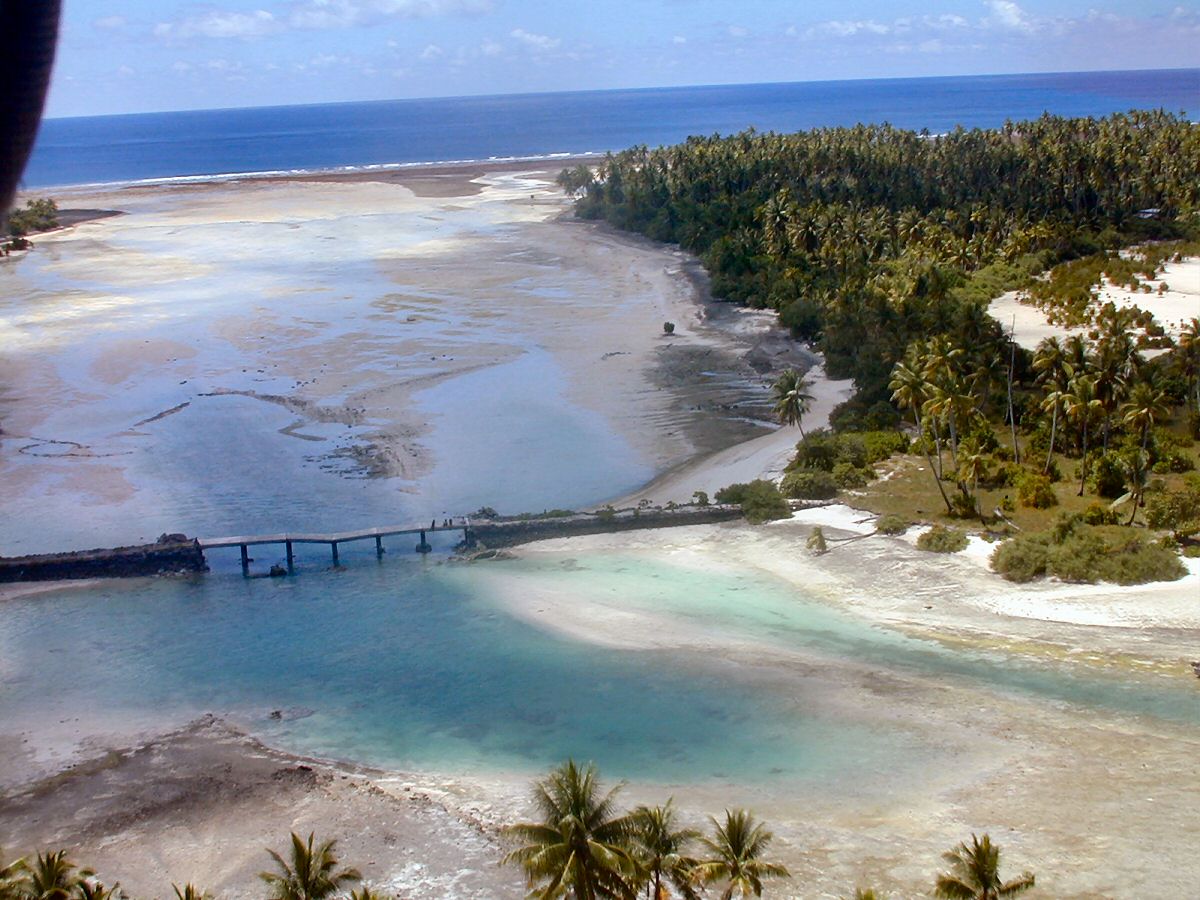
2. The government created a marine sanctuary the size of my home state of Washington.

If that ping pong thing doesn't work out, I'll fully support ray racing as an Olympic sport:


4/15/08

Aquarium Zen


Doing some research in the AZA report called Why Zoos Matter.

Much of the report is pretty straight forward. In a nutshell: zoos and aquariums reinforce visitor's connection with nature and commitment to conservation.

One part jumped out at me. The study classified a certain percentage of zoo and aquarium visitors as "spiritual pilgrims."

Spiritual Pilgrim
Finding: Spiritual Pilgrims are the smallest group overall (4%), with very different needs, and tend to be more common in aquariums.
Implications: Aquariums and zoos need to balance the needs of Spiritual Pilgrims with those of other visitors (e.g., the very social Facilitators). Zoos and aquariums could create areas for reflection, and offer programs at quieter times of day or year. Like Professional/Hobbyists, Spiritual Pilgrims represent a great source of volunteers, members and donors.

The conservation message of a zoo or aquarium doesn't just elicit action and sympathy on the part of the animals ... it inspires introspection on the part of the visitor. Interesting...


Northern Fur Seals are Geniuses


There are some things you can only understand by watching in person.

I had always had a hard time conceptualizing how trainers are able to teach animals a long series of complex behaviors. Yesterday I had the opportunity to watch the NEAq trainers work with the Aquarium's three northern fur seals.

It was really eye opening.

After each desired behavior (no matter how simple), the seals are rewarded with a handful of squid or herring. The constant reinforcement works! These seals haven't been at the Aquarium that long, and they're already trained to open their mouth, vocalize, wave, greet visitors, salute, twirl, sink to the bottom of the enclosure, blow kisses, and I'm sure a bunch of other behaviors that the trainers didn't get to in that one brief session.

Everyone always asks about how to become a mammal trainer, because the job looks like so much fun. The trainers definitely build an amazing relationship with the animals. At the same time, watching it up close, you can see how much work it is. The trainers are constantly monitoring their seal to make sure the behavior is being registered. That's a pretty tough job. Plus, you have to cut up a lot of fish and squid.

According to the National Marine Fisheries Service, the number of northern fur seals in the Eastern Pacific was as high as 2 million animals in the 40s and 50s. Today that number is about 721,000. Last year, the NOAA Marine Mammal Laboratory tagged 131 northern fur seals on their largest breeding location, St. Paul's Island. The study will help clarify what is causing the decline in population.

Here's hoping conservation efforts yield real results. These animals are incredible.

4/11/08

Cuttlefish Appreciation Day

I spent forever at the aquarium just watching it move, and taking some video. Check it out.


And here's a playlist of some of my favorite cuttlefish videos from youtube.


Truly amazing creatures.

The recent NOVA program was fascinating. Unfortunately the site of the annual cuttlefish aggregation for breeding near Whyalla, Australia is under threat of development.
Hopefully the conservationists and the diving/tourism industry will be able to force minimal impact on the harbor so the yearly mating fireworks can continue, undisturbed.

Talking Truth About Sharks

As I spend more and more time learning about the aquarium, one of the things I notice is how important education is to conservation efforts. The first thing every visitor asks during feeding time at the Great Ocean Tank is "why don't the sharks bite the divers."

While I think that most people have a lingering sense that not all sharks are possessed of a Jaws-esque blood lust, that demonizing fear is still the cultural default. That default is inaccurate and it may have real consequences for conservation efforts.

Christopher Chin, a data analyst, diving expert and founder of the The Center for Oceanic Awareness, Research, and Education, makes an excellent point about a recent shark death in the Bahamas in this article on Deeper Blue:

This event was a terrible, but freak accident. Roughly 40 people die each year in parachuting accidents in the US alone. An equal number die in skiing accidents, again, just in the US. In 2007, there was only ONE shark related fatality... worldwide. Yet, we managed to kill more than 100 million of them.

This leaves me wondering, how can we continue to talk about sharks in a way that explores their predatory attributes without demonizing them as a species? The current meme of "sharks the wolves of the sea, but not very many kill people," doesn't seem to be working.

4/10/08

Realizing "I work for an Aquarium"

This is my first post on The New Blue, and I want it to convey how awestruck I am with this place and how I got here.

Three years ago I was teaching history to high school sophomores during the day, teaching middle school kids how to write news stories during the afternoon, and working at Starbucks during the weekends. If you had come to me then and told me that someday I would be editing content for the most prestigious aquarium in the world, I would have chuckled quietly to myself before breaking down sobbing at such a beautiful thought.

And yet here I am.

My official title is Editor and Web Coordinator for the Communications and Marketing Department at the New England Aquarium. This is my blog about the Aquarium. It's starting, literally, from the beginning. As of now, I know next to nothing about the vast network of people working here. As I find out, I'll write about it here.

Not only should there be some fascinating observations... but I will have multiple opportunities to pun on the word "fishy." Look forward to that!